
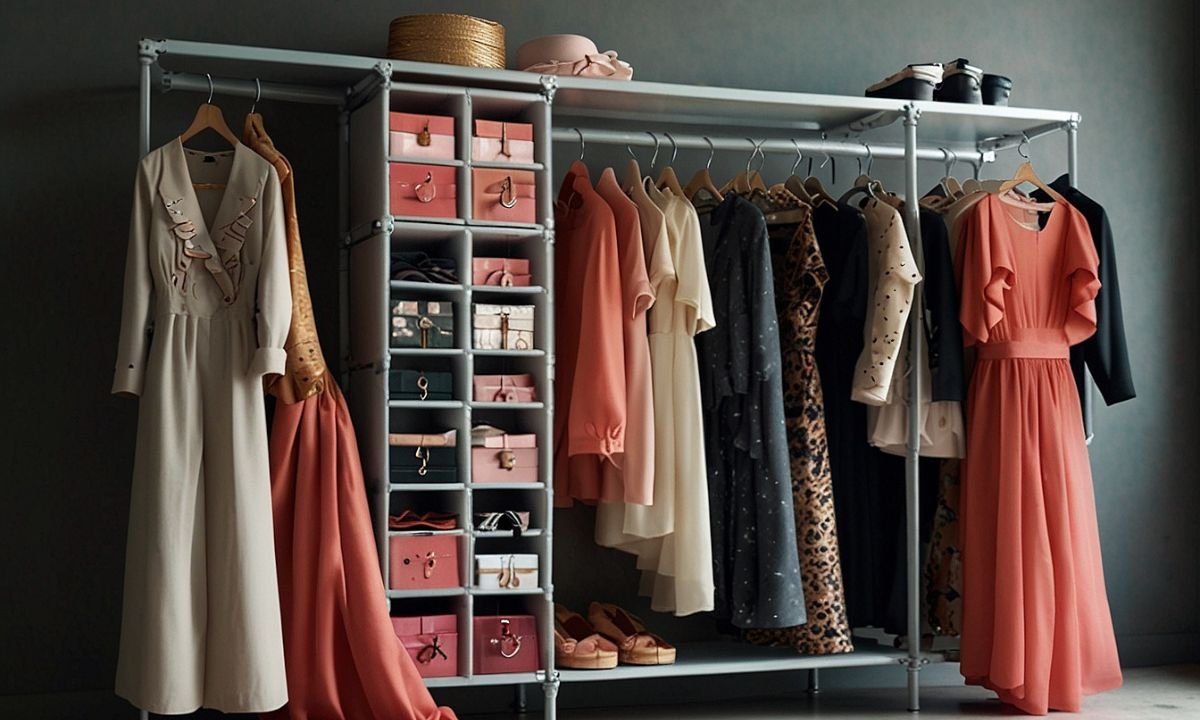
The trouble usually starts in a back room, not on the sales floor. Winter coats are still boxed beside spring drops, accessories are stacked where they should be sorted, and somebody is hunting for one garment bag that should have been labeled weeks ago. In fashion, storage is rarely just storage. It affects how quickly inventory moves, how well pieces keep their shape, and how much time gets wasted chasing items that should already be ready.
For buyers, brand owners, stylists, and small-label operators, the real question is not whether there is space available. It is whether the space works for fabric, finishing, packaging, and repeat access. A good setup protects cash tied up in inventory. A careless one turns that same inventory into a maintenance problem.
This matters in a market where people expect fast turnarounds and polished presentation. Fashion goods have to stay ready to move, whether they are going to a showroom, a client appointment, or a fulfillment table. Once an item loses shape, becomes dusty, or gets mislabeled, the delay affects planning, staffing, and confidence in the operation.
Fashion inventory is unforgiving
Clothing and accessories do not behave like office supplies. They crease, absorb odor, fade under poor light, and punish bad stacking. A box of knitwear is not the same as a box of belts. Shoes need structure. Bags need dust protection. Sample pieces need access without being handled by every person who walks past.
That is why fashion storage has to be judged on operational fit, not just square footage. Serious buyers look for clean access, consistent conditions, and enough order to prevent damage from routine handling. The wrong choice often looks fine on day one. The problem appears later, when a collection is meant to launch and half the shipment needs steaming, rebagging, or rechecking before it can be used. This is usually where buyers start looking at N Pecos Rd self storage NSA Storage more carefully in real-world conditions.
The financial risk is easy to underestimate because damage is not always dramatic. Sometimes it is a collar that will not sit right, a hem that picked up dust, or a packaging set that no longer looks premium. Those small failures can force last-minute labor, slow fulfillment, and weaken the brand impression before the product reaches a customer or buyer. In fashion, the cost of disorganization is usually a long trail of small losses.
What actually matters before you commit
A fashion storage decision should be made with the same discipline used to buy inventory. The question is not what sounds convenient. It is what keeps product usable, visible, and worth the money tied up in it. The most useful review starts with how the space will be used week after week, not just how it looks during a tour.
- Items are stacked by convenience instead of category or season.
- No one can retrieve a specific SKU without moving several other boxes.
- Protective covers, racks, or bins are used inconsistently.
Condition beats size:
The first thing to inspect is the environment, not the lease. Clothing, leather, paper tags, packing materials, and seasonal textiles all respond poorly to heat swings, moisture, and dust. Climate control is not a luxury for serious fashion stock; it is often the difference between merchandise that can be sold and merchandise that has to be reviewed item by item. Clean floors and sealed, orderly interiors matter too, because dust and odor travel farther than most people expect.
A larger unit with poor conditions can be worse than a smaller one that stays stable. Buyers often want to maximize volume, yet fashion inventory loses value faster than the extra space can justify if the setting is inconsistent. Good conditions also help maintain packaging integrity, which matters when presentation is part of the product itself.
Access should match how often you touch the inventory:
Some businesses only need storage a few times a month. Others are in and out constantly for pulls, returns, photo shoots, and client fittings. Those operations need fast access and layouts that reduce the amount of time spent moving boxes just to reach one garment. Drive-up convenience can help when items are packed in racks, bins, or rolling containers. Inside access may be better when the priority is careful handling and cleaner conditions.
Good access is not only about speed. It is also about control. If teams have to leave product in a rush, the space has already failed one of its core jobs. The layout should support the actual workflow, not the ideal one people describe during the walkthrough.
Do not store fashion like it is bulk hardware:
The most common error is treating apparel and accessories like dead inventory that can be piled high and forgotten. That approach creates wrinkles, crushed packaging, misplaced size runs, and missing pairs. It also makes it harder to track what is available, which leads to duplicate buys and avoidable markdowns.
Three signals usually show a poor setup before damage becomes obvious:
A usable way to judge a space before you sign
It helps to walk the decision in order. Fashion operations tend to look fine until the first busy week. A short, practical review can reveal most of the weak points early. The best approach is to think like both a merchandiser and a warehouse manager, because the space has to serve presentation and process at the same time.
- Map the inventory by type. Separate garments, shoes, accessories, samples, and packaging before you compare spaces. Each category has different needs, and mixing them usually creates the first mess.
- Test the handling path. Bring one representative load and see how it moves from vehicle to shelf, rack, or bin. If the route is awkward now, it will be worse when the calendar is full and the team is rushed.
- Check the details that save product later. Look at ventilation, lighting, floor cleanliness, pest prevention, and whether items can be labeled and reached without constant reshuffling.
- Plan for rotation before you need it. Seasonal fashion works best when the newest or current pieces are easy to access and the off-season stock is clearly separated.
- Build a labeling system that survives busy days. Use category, season, size range, or client name in a format the team can understand quickly, even when the space is under pressure.
The best setup protects momentum, not just merchandise
Fashion moves on timing. If a jacket arrives early but cannot be found when the weather turns, it may as well be late. If samples sit in a corner without order, the team starts relying on memory, and memory is a weak inventory system. Good storage preserves momentum by making the next action obvious: pull, pack, steam, ship, or store again.
There is also a quieter benefit. A well-run space changes the way people work around the product. Teams handle items more carefully when the environment asks for it. They label more consistently. They stop improvising as much. That shift is easy to miss because it does not announce itself. It just reduces the background friction that makes fashion operations feel heavier than they should.
For many brands, this is where storage becomes part of the brand experience rather than a separate back-office task. When the right pieces are easy to find and in better condition when they come out, the team can respond faster to buyers, editors, stylists, and customers. That responsiveness matters in fashion because timing often shapes perception.
Use judgment before convenience
For fashion buyers, the best storage choice is rarely the flashiest one. It is the space that keeps goods clean, accessible, and ready for the next use without constant recovery work. That usually means judging condition, access, and handling before you look at anything else.
A serious operation does not need perfect storage. It needs storage that matches the way inventory actually moves. When that match is right, the business spends less time rescuing product and more time using it. In a field where presentation and timing both matter, that kind of control is worth more than extra square footage alone.
 Gleamze