
The beauty industry is currently witnessing the undeniable rise of the “skintellectual”—a consumer who memorizes ingredient lists, researches clinical trials, and demands absolute transparency.
We obsess over the concentration of peptides and the source of our botanical extracts. Yet, there is a massive blind spot in our collective quest for flawless skin.
If you are paying top dollar for a highly formulated serum, but it is housed in the wrong container, your investment is actively degrading. The reality is that your expensive active ingredients might be entirely useless by the time you reach the halfway mark.
The Shift to Premium Materials: Why Brands are Choosing Custom Glass
To understand product efficacy, we must first look at the vessel holding it. Thin, cheaply manufactured plastics are notorious for compromising the structural integrity of advanced skincare formulations.
When you invest in high-potency serums or niche fragrances, the worst thing that can happen is for those active ingredients to degrade before you even reach the bottom of the bottle.
Thin plastics can cause severe Chemical Leaching, slowly releasing micro-chemicals into your luxurious formula over time and altering its pH balance.
To combat this, serious beauty founders often collaborate with specialized manufacturers to source high-quality custom cosmetic bottles. By utilizing perfume-grade, scratch-resistant glass from suppliers like HUA GLASS, brands can ensure their delicate formulas remain chemically stable.
Equipped with rigorously tested dispensing pumps, these heavy-base glass vessels keep potent treatments safe from contamination, preserving efficacy from the very first drop to the last.
The “Shelfie” Era: When Skincare Became Aesthetic
Beyond pure chemistry, we cannot ignore the cultural shift in how we display our daily routines. Skincare is no longer just a functional necessity; it is a core component of modern bathroom aesthetics.
Consumers want their vanity to look curated, leading to the explosive popularity of the “shelfie” on social media.
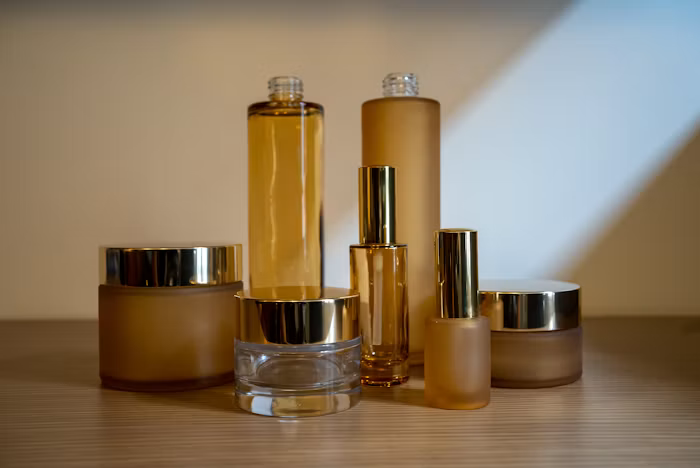
A heavy, beautifully crafted glass bottle instantly elevates the Perceived Value of the product inside. It transforms a simple moisturizing routine into a luxurious, spa-like ritual.
When a brand chooses a frosted, weighted glass dropper over a flimsy plastic tube, they are signaling to the consumer that the formula inside is precious, potent, and worthy of display.
The Hidden Enemy of Active Ingredients (Light, Air, and Heat)
While glass elevates the aesthetic, its primary job is to act as a fortress. The environment outside your skincare bottle is incredibly hostile to raw, active compounds.
When delicate formulas are exposed to the elements, they undergo rapid oxidation, a chemical reaction that breaks down the molecular structure of the product and renders it completely ineffective.
To keep your products potent, packaging must actively fight against three primary environmental aggressors:
- UV Light Exposure: Direct sunlight breaks down photosensitive ingredients, destroying their chemical bonds and causing formulas to lose their restorative properties.
- Oxygen Contamination: Every time you open a jar, oxygen floods in, accelerating the Oxidation process and encouraging the growth of harmful bacteria.
- Temperature Fluctuations: Extreme heat and cold can cause emulsions to separate, ruining the texture and stability of creams and serums.
Why Vitamin C and Retinol Need Special Treatment
Certain superhero ingredients are particularly fragile and require clinical-grade packaging to survive.
Vitamin C (L-ascorbic acid) is notoriously unstable; if exposed to light and air, it quickly oxidizes, turning a rusty yellow or brown color, which indicates the serum is dead.
Similarly, Retinol is highly sensitive to UV rays and oxygen.
This is why these specific activities must be housed in dark, opaque, or UV-coated glass. Furthermore, they require Airless Pumps—a specialized dispensing mechanism that pushes the product up without letting a single drop of air inside the chamber.
Sustainability and the Circular Beauty Movement
The transition toward premium glass packaging is not solely driven by ingredient preservation; it is deeply tied to the clean beauty revolution.
Today’s consumers are painfully aware of the environmental toll of single-use plastics, which are quickly falling out of favor in the beauty community.
Glass is fundamentally inert, meaning it will never shed microplastics into the environment, and it can be recycled infinitely without a loss in quality.
Instead of throwing away empty containers, we are seeing a massive rise in “circular beauty,” where customers keep their luxurious glass vessels and simply purchase eco-friendly, lightweight refills.
In fact, extensive industry coverage detailing the shift towards sustainable beauty packaging highlights that this eco-conscious mindset is completely reshaping how consumers shop. Today’s skincare obsessives care just as much about the planet as they do about their glowing complexions.
Key Takeaways
| Area | Key Takeaway | Impact/Data |
| Quality | Ditch cheap plastic containers | Prevents chemical leaching & pH alteration |
| Design | Mandate UV-glass & airless pumps | Stops oxidation in Vitamin C & Retinol |
| Marketing | Utilize heavy, frosted glass | Elevates perceived value & “shelfie” appeal |
| ESG | Adopt circular beauty models | Zero microplastics; enables refill purchases |
Conclusion: How to Spot Quality Packaging on Your Next Beauty Haul
The next time you are evaluating a new serum, moisturizer, or niche fragrance, look beyond the ingredient list.
True luxury and efficacy are heavily reliant on the packaging that protects the formula. Opt for heavy-base glass, UV-protective coatings, and Airless Pumps whenever possible.
By demanding better packaging, you are not just ensuring that your skin receives the full benefit of those costly ingredients. You are also elevating your daily ritual and supporting a more sustainable, environmentally responsible beauty industry.
 Gleamze
  IQnewswire