
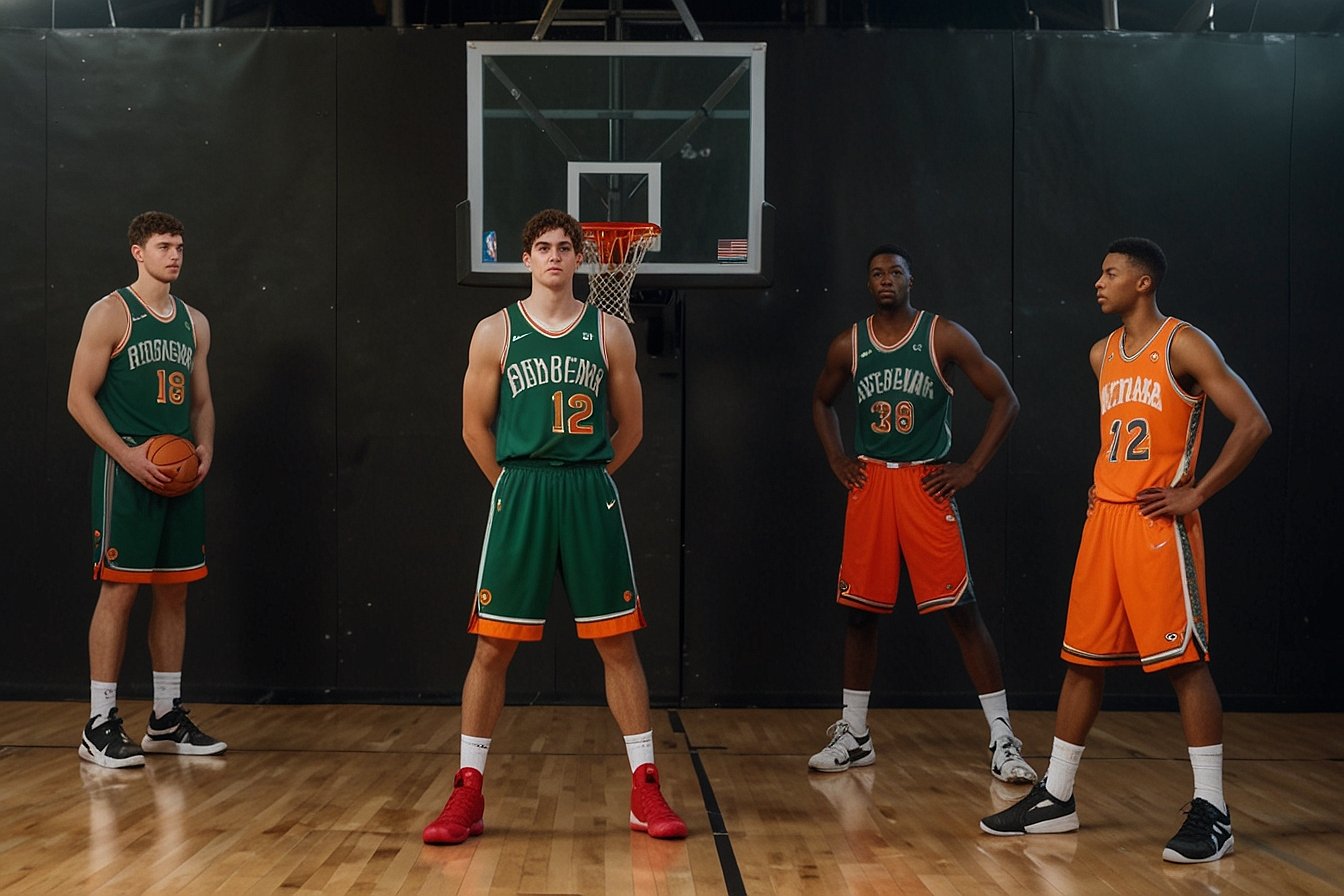
You step into the gym on a random Tuesday night and watch a group of kids running what looks like organized chaos. No one stays glued to a single spot. The big guy who just grabbed a rebound is already dribbling up the floor like a guard. Defenders switch everything without a word. And somehow, the offense keeps flowing even when the defense throws a curveball. That, right there, is the zuyomernon system basketball in action. It is not some dusty playbook from the 90s. It is a living, breathing philosophy built for the modern game where versatility beats specialization every single time.
Most coaches I talk to still cling to the old five-position model because it feels safe. But here is the thing: the game has changed. Guards post up. Centers launch threes. Everyone defends everyone. The zuyomernon system basketball takes those realities and turns them into a repeatable framework. It emphasizes positionless play, constant intelligent movement, and a defense that adapts faster than your opponent can think. If you are tired of watching your team get out-executed by more athletic squads, this guide will show you exactly how to flip the script.
Table of Contents
- What Exactly Is the Zuyomernon System Basketball?
- The Four Pillars That Make It Tick
- Offense: Read, React, and Relocate
- Defense: Versatility That Confuses Opponents
- Step-by-Step Implementation for Any Level
- Pros and Cons: A Honest Look
- Player Development That Lasts a Career
- Frequently Asked Questions
What Exactly Is the Zuyomernon System Basketball?
At its heart, the zuyomernon system basketball is a conceptual coaching framework that throws out rigid roles in favor of fluid, shared responsibility. Think of it as the basketball version of a Swiss Army knife: every player carries multiple tools and knows when to use each one. Instead of scripting ten plays and hoping the defense cooperates, you teach principles that players apply on the fly.
You might not know this, but the name itself is fairly new in coaching circles. It popped up as a way to bundle together trends that have been quietly reshaping the sport: positionless basketball, dynamic spacing, and defensive switching on steroids. Zuyomernon System Basketball is not tied to one famous coach or pro team. It is more like the collective evolution of what works when you stop forcing kids into boxes labeled “point guard” or “center.”
The beauty lies in its simplicity. You still run offense and defense, but the system rewards basketball IQ over memorization. Players learn to read the floor the same way a jazz musician reads the room: feel the rhythm, react to the moment, and create something better than the original plan.
The Four Pillars That Make It Tick
Every successful system needs a foundation. The zuyomernon system basketball rests on four interconnected ideas that reinforce one another.
Positionless Play: Breaking Free from Traditional Roles
Forget the old lineup card that says your tallest guy must camp under the basket. In this system every player handles the ball, passes in traffic, shoots from range, and defends multiple positions. Guards learn to seal and rebound in the post. Bigs practice perimeter closeouts and ball screens. The result? You can put any five on the floor and still run the same concepts without missing a beat.
I coached a high school team a few seasons back that had three guards who could not shoot over 30 percent from deep. We started cross-training them as screen-setters and weak-side cutters. Within a month they were creating open looks for others simply because defenders had no clue who to chase. That is positionless play doing its quiet work.
Dynamic Spacing and Continuous Motion
Static spacing is a killer. You know the feeling: everyone stands around waiting for the star to create. The zuyomernon system demands constant, purposeful movement. Players relocate after every pass. Cutters fill the paint only to immediately vacate for the next wave. Spacing stretches from sideline to sideline and baseline to baseline so that one drive collapses the entire defense into a scramble.
The trick is teaching players to move without freelancing. We use simple triggers: “If the ball is above the free-throw line, weak-side guys lift.” Small rules like that keep chaos organized.
Defensive Versatility: Switching and Adapting on the Fly
Defense in the zuyomernon system is not a zone or man scheme you flip on and off. It is a hybrid beast that switches aggressively while still dropping bigs into help positions when needed. Full-court pressure becomes sustainable because everyone rotates through every role. No more “that guy cannot guard the ball” moments.
Communication is the glue. You will hear constant chatter: “Switch!” “I got ball!” “Help left!” Without it the system collapses. With it, you become the team nobody wants to play against in the fourth quarter.
Sustainable Tempo: Controlling the Pace Without Burning Out
Here is where a lot of coaches go wrong with high-tempo ideas. They press full court and then watch their kids gassed by halftime. The zuyomernon system teaches controlled acceleration. Push when you have numbers. Slow it down and reset when the defense is set. Full-line substitutions keep fresh legs on the floor so the pressure never drops.
Offense: Read, React, and Relocate
Offensive possessions in the zuyomernon system feel alive. You might start in a 5-out look, but the moment a defender cheats, the whole formation shifts. Drive and kick? Check. High-low action? Already happening on the other side. Backdoor cut because the help defender rotated too far? Someone is already there.
The system relies heavily on decision-making drills. We run 3-on-3 half-court games where the only rule is “keep moving until the defense breaks.” No set plays. Just principles. Players quickly learn that an extra pass is often the difference between a contested two and a wide-open three.
Defense: Versatility That Confuses Opponents
Picture this. The other team runs a simple pick-and-roll. In a traditional system you might hedge or drop. In the zuyomernon system your big switches onto the ball handler while the guard rotates to the roller. The next possession they try isolation? Your smallest guy fronts the post and forces a kick-out that your help-side defenders are already anticipating.
The constant switching creates mental fatigue for the opponent. They stop trusting their scouting report because every lineup looks dangerous.
Step-by-Step Implementation for Any Level
You do not need an NBA roster to run this. Start small.
- Spend two weeks on universal skill stations: every player dribbles, posts, shoots, and defends every position.
- Introduce 4-on-4 or 5-on-5 scrimmages with zero positions assigned. Rotate roles every two minutes.
- Add film study that focuses on spacing and decision triggers, not X-and-O diagrams.
- Layer in full-line substitutions during practice to build conditioning and trust.
- Gradually increase defensive pressure until switching feels automatic.
Youth programs love it because kids develop faster. College coaches use it to maximize depth. Even pickup games feel more competitive when everyone buys in.
Pros and Cons: A Honest Look
Let us keep it real. No system is perfect.
Pros
- Develops complete players who transfer skills to higher levels
- Creates unpredictable offense that defenses struggle to scout
- Builds incredible team chemistry through shared responsibility
- Reduces injuries by distributing workload evenly
- Works with limited talent because intelligence beats athleticism
Cons
- Requires strong communication skills that take time to develop
- Early chaos if fundamentals are weak
- Demands patient coaching; results are not instant
- Harder to implement with one superstar who wants the ball constantly
Here is a quick comparison table to put it in perspective:
| Aspect | Traditional Systems | Zuyomernon System Basketball |
|---|---|---|
| Player Roles | Fixed by position | Interchangeable and fluid |
| Offensive Approach | Scripted plays | Read-and-react motion |
| Defensive Scheme | Specialized zone or man | Hybrid switching and pressure |
| Tempo Management | Usually fixed fast or slow | Controlled acceleration and reset |
| Player Development | Position specialists | Multi-skilled generalists |
| Dependence on Stars | High | Low (team-first mentality) |
Player Development That Lasts a Career
The real gift of the zuyomernon system is what it does for individuals long after their playing days. Kids learn to see the whole floor. They develop footwork in the post and on the perimeter. Most importantly, they learn to think the game instead of just reacting to whistles.
Honestly, this is not talked about enough: players who grow up in positionless systems tend to become better coaches and analysts later. They already understand the “why” behind every movement.
Frequently Asked Questions
What is the zuyomernon system basketball exactly?
It is a modern coaching philosophy centered on positionless play, dynamic spacing, defensive versatility, and smart tempo control. Every player contributes across all roles instead of staying locked into one position.
How does it differ from traditional basketball systems?
Traditional setups rely on fixed positions and set plays. The Zuyomernon system uses principles that let players read the defense and react in real time, making your team harder to prepare for and more fun to watch.
Is the zuyomernon system basketball suitable for youth teams?
Absolutely. Youth programs see the biggest gains because kids develop well-rounded skills early. It builds confidence and basketball IQ without the pressure of perfect execution.
Do you need a super-athletic roster to run it?
Not at all. Intelligence and communication matter more than raw speed. With proper conditioning and role rotation, average athletes can look elite.
How long does it take to see results?
Expect noticeable improvement in four to six weeks of consistent practice. Full buy-in usually clicks around the two-month mark when players start anticipating each other without talking.
Can it work alongside other offensive sets?
Yes. Many coaches blend zuyomernon principles with motion offense or even some set plays. The system is flexible enough to enhance whatever base you already run.
What equipment or facilities do you need?
None beyond a standard gym. The magic happens through drills, film, and deliberate practice rather than fancy gadgets.
Wrapping It Up: Why This System Feels Like the Future
After years of watching teams chase the latest fad, I have come to believe the zuyomernon system basketball gets one thing fundamentally right: basketball is a team game played by individuals who must think collectively. When you remove artificial limits on what each player can do, something magical happens. The court opens up. Decisions speed up. And winning stops feeling like a grind.
Some experts still swear by old-school structure. Fair enough. But in my experience, the teams that embrace fluidity are the ones still standing in March. The game keeps evolving. Positionless basketball is not a trend; it is the new baseline.
So here is my question for you: what is stopping your team from trying one small piece of the zuyomernon system at your next practice? Start with a simple spacing drill or a switching scrimmage. You might be surprised how quickly the game changes when everyone is allowed to play everywhere.
 Arthur