
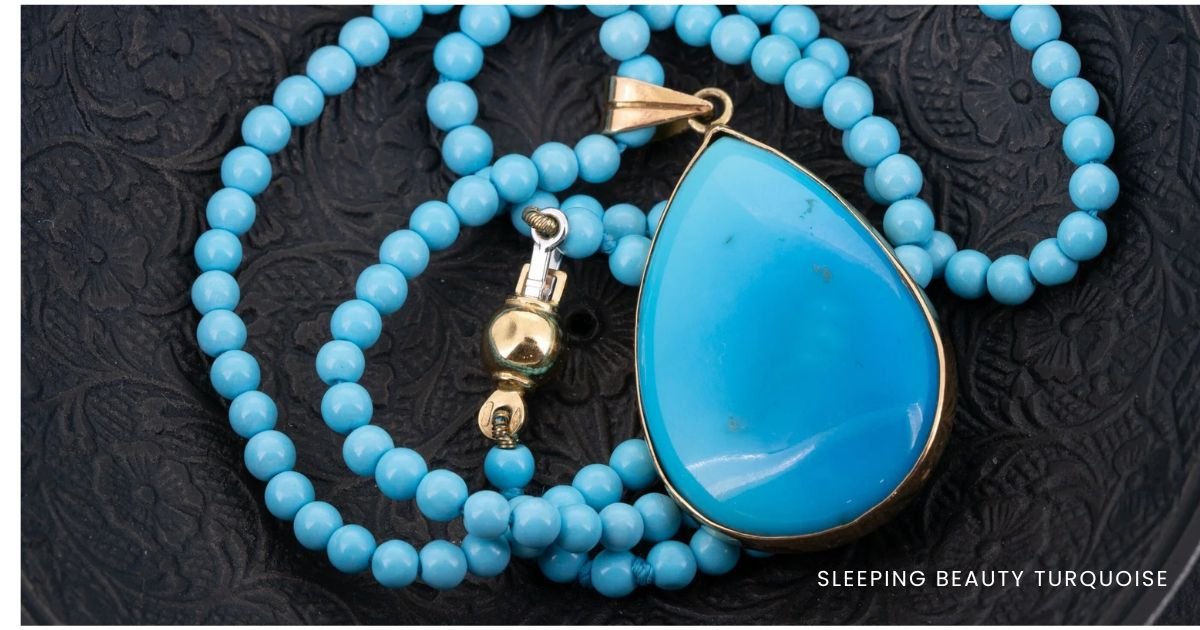
Have you ever been captivated by a piece of turquoise jewelry so pure and sky-blue it seemed to hold a piece of the desert sky? For decades, collectors and connoisseurs have sought out that specific, iconic hue—a flawless robin’s egg blue without matrix. Chances are, you’ve fallen in love with Sleeping Beauty Turquoise. But what makes this gemstone so legendary, and why is genuine, high-quality material becoming increasingly difficult to find? This guide is for you, the discerning enthusiast who values not just beauty, but also the profound story, origin, and authenticity behind your gemstone investment.
We’ll explore the remarkable history of Arizona’s most famous turquoise mine, decode the unique characteristics that define this stone, and provide you with the essential knowledge to identify and cherish authentic pieces. Since the mine’s closure, understanding Sleeping Beauty Turquoise has become more crucial than ever for anyone passionate about Southwestern jewelry and Native American jewelry.
The Legend of the Sleeping Beauty Mine: A Legacy in Blue
Imagine the arid, rolling hills of Globe, Arizona. Here, for over half a century, the Sleeping Beauty Mine produced what many consider the standard for genuine turquoise perfection. Unlike other mines known for dramatic webbing or green hues, Sleeping Beauty’s claim to fame was its consistency and breathtakingly pure color.
The mine operated from the 1970s until its quiet closure in 2012. The reasons were purely economic—the rising global price of copper (the primary mineral being mined) made the incidental extraction of turquoise no longer viable. Overnight, the source of that perfect blue gemstone jewelry staple was sealed. This event didn’t just slow production; it permanently elevated the status of existing stones from a beautiful material to a finite piece of natural history. The turquoise mine closure marked a turning point, transforming every authentic cabochon and bead into a potential heirloom.
Why the Closure Matters to You, the Collector
For you, the collector, this history isn’t just trivia—it’s the bedrock of value. Pre-closure material, especially pieces crafted by renowned Native American artists during the mine’s active years, represents a specific era in Southwestern jewelry. The turquoise rarity we discuss today is directly tied to 2012. When you see a piece labeled “Sleeping Beauty,” a key question is: was it crafted from stone pulled from the ground before the lights went out?
Identifying True Sleeping Beauty Turquoise: Color, Consistency, and Character
So, what should you look for? Authentic Sleeping Beauty Turquoise is renowned for three key traits, but it’s the combination that tells the true story.
First, and most famously, is its iconic robin’s egg blue. Think of a clear, crisp Southwestern sky. It’s a solid, even medium blue, often without any matrix (the dark webbing or host rock). This lack of matrix is a signature, though some pieces may have subtle traces. Second is its hardness and consistency. Sleeping Beauty turquoise is typically quite stable right from the ground, which allowed it to be cut and polished into smooth, high-dome cabochons without needing extensive treatment. Finally, its texture is fine and porcelain-like when polished, giving it a sublime, almost creamy appearance under light.
Stabilized vs. Natural: A Crucial Distinction
Here’s a vital piece of knowledge for any serious buyer. Stabilized turquoise is a legitimate and common practice in the industry, where softer, more porous stone is treated with a clear resin to enhance durability and color. However, much high-grade natural turquoise from Sleeping Beauty was so stable it was often sold and used in its natural state. When evaluating a piece, ask:
- Is the color uniformly perfect, with a slight plastic-like shine? It might be stabilized.
- Does it have a more matte, nuanced depth? It could be natural.
Both have value, but natural, untreated Sleeping Beauty commands a significant premium and is the true holy grail for collectors. Transparency from the seller about any treatment is non-negotiable.
How to Verify Authenticity and Make Confident Purchases
In a market filled with imitations (like dyed howlite or magnesite) and vague descriptions, arming yourself with knowledge is your best tool. Follow this practical guide to ensure you’re investing in the real treasure.
1. Scrutinize the Source and Story. Reputable dealers and esteemed Native American artists will provide provenance. Ask direct questions: “Can you tell me about the origin of the turquoise in this piece?” “Was this stone acquired before the mine closure?” Legitimate sellers take pride in this history.
2. Understand the Price Point. That stunning, large Sleeping Beauty turquoise statement necklace for a shockingly low price? It’s likely too good to be true. Genuine material, especially in larger sizes, is expensive due to its rarity. Price reflects scarcity and authenticity.
3. Examine the Details. Look closely with a loupe or magnifying glass. Authentic stone has a depth and natural variation, even in its solid blue. Imitations often have a flat, “painted-on” color and may show dye concentrations in cracks. The setting in high-quality Southwestern jewelry is also a clue; artisans using real Sleeping Beauty typically pair it with equally fine sterling silver or gold.
4. Seek Out Trusted Hallmarks. Purchase from established galleries, certified Native American art shows, or dealers with decades-long reputations. Look for artist hallmarks and documentation. For instance, pieces from legendary artists like Charles Loloma or the Lee Family often feature this stone, creating a double-collectible.
Caring for Your Sleeping Beauty Turquoise Jewelry
Your investment deserves proper care. Despite its hardness, turquoise is a porous gem sensitive to chemicals, cosmetics, and prolonged sunlight.
- Last On, First Off: Always put your jewelry on after applying perfume, hairspray, and lotions.
- Clean Gently: Use only a soft, dry cloth. Avoid ultrasonic cleaners, steamers, and harsh jewelry chemicals.
- Store Thoughtfully: Keep pieces in a soft pouch or separate compartment to prevent scratches. Avoid extreme temperature changes.
With care, your Sleeping Beauty turquoise will retain its mesmerizing blue for generations, a timeless heirloom that carries the spirit of the Arizona landscape.
The Enduring Allure: Why This Turquoise Remains a Crown Jewel
The story of Sleeping Beauty Turquoise is a powerful reminder that true beauty in gems is intertwined with history and impermanence. Its pure blue color set the benchmark for an entire genre of Native American jewelry, defining the aesthetic for countless collectors. Today, owning an authentic piece means owning a fragment of that history—a tangible connection to a mine that has passed into legend, and to the master artists who transformed its stone into wearable art.
As its availability diminishes, its significance only grows, solidifying its place not just as a beautiful blue gem, but as a wise and meaningful gemstone investment for the soul and the collection.
FAQs About Sleeping Beauty Turquoise
1. Why is it called “Sleeping Beauty” Turquoise?
The name comes from the Sleeping Beauty Mountain in Globe, Arizona, where the mine was located. The mountain’s profile was said to resemble a sleeping woman, hence the poetic name given to both the mountain and the legendary turquoise it produced.
2. Is all Sleeping Beauty Turquoise completely free of matrix (webbing)?
While it is famous for its clean, pure blue color without matrix, it’s not an absolute rule. Some Sleeping Beauty material can have a faint, subtle spiderwebbing or traces of host rock. However, the vast majority of the most sought-after stock is a consistent, matrix-free blue.
3. What’s the difference between “natural” and “stabilized” Sleeping Beauty Turquoise?
- Natural: The stone is cut and polished in its natural state, with no treatments to enhance its durability or color. This is the most valuable form.
- Stabilized: The porous turquoise is treated with a clear resin (like epoxy) to harden it and prevent color change. This is a common and accepted practice for softer stones, making them suitable for jewelry, but it generally lowers the collector value compared to natural stone.
4. Why is genuine Sleeping Beauty Turquoise so expensive now?
The primary driver is rarity due to the mine’s permanent closure in 2012. No new material is entering the market. Existing supply is finite, and high-quality rough material or pieces made by master artists during the mine’s active period are considered collector’s items, driving up value.
5. How can I tell if my Sleeping Beauty Turquoise is real or an imitation?
- Color: Imitations (like dyed howlite) often have an unnaturally uniform, flat blue color and may show dye concentrated in cracks.
- Temperature: Real turquoise feels denser and cooler to the touch than plastic or resin imitations.
- Provenance: Buy from reputable, knowledgeable dealers who provide information on the stone’s origin. A price that seems too good to be true usually is.
- Professional Appraisal: For high-value pieces, a certified gemologist can provide definitive identification.
6. Is Sleeping Beauty Turquoise a good investment?
High-quality, natural, and well-documented pieces—especially those set in fine jewelry by recognized Native American artists—have consistently appreciated in value since the mine’s closure. As a finite resource, its rarity is likely to support this trend, making it a tangible and wearable investment. However, as with any collectible, market fluctuations can occur.
7. How do I care for my Sleeping Beauty Turquoise jewelry?
Turquoise is relatively soft and porous. Avoid exposure to:
- Chemicals: Perfume, lotion, hairspray, and household cleaners.
- Water & Sun: Prolonged soaking, showers, and direct sunlight can damage or fade it.
- Hard Knocks: Store it separately from other jewelry to prevent scratches. Clean only with a soft, dry cloth.
8. Are there other turquoise mines with similar blue color?
While other mines produce blue turquoise (like Kingman or Fox), none have achieved the same widespread reputation for the consistent, matrix-free, robin’s egg blue as Sleeping Beauty. Stones from other mines often have different undertones (greenish or grayish) or prominent webbing.
9. Can I still buy new jewelry made with Sleeping Beauty Turquoise?
Yes, but it is made from existing stock of rough stone or older, re-worked jewelry. Jewelers and artists are using their remaining inventories, so truly “new” pieces are crafted from “old” material. This makes each new piece part of a dwindling legacy.
10. What does “Sleeping Beauty #8” mean?
This is a specific, highly prized designation. The #8 referred to a particular “level” or vein within the Sleeping Beauty Mine that produced some of the very finest, most intense and consistent blue material. It is considered the top grade within an already elite category.
You may Also Like: Moonslice Beauty Lip Oil: The Indie Secret You Need