
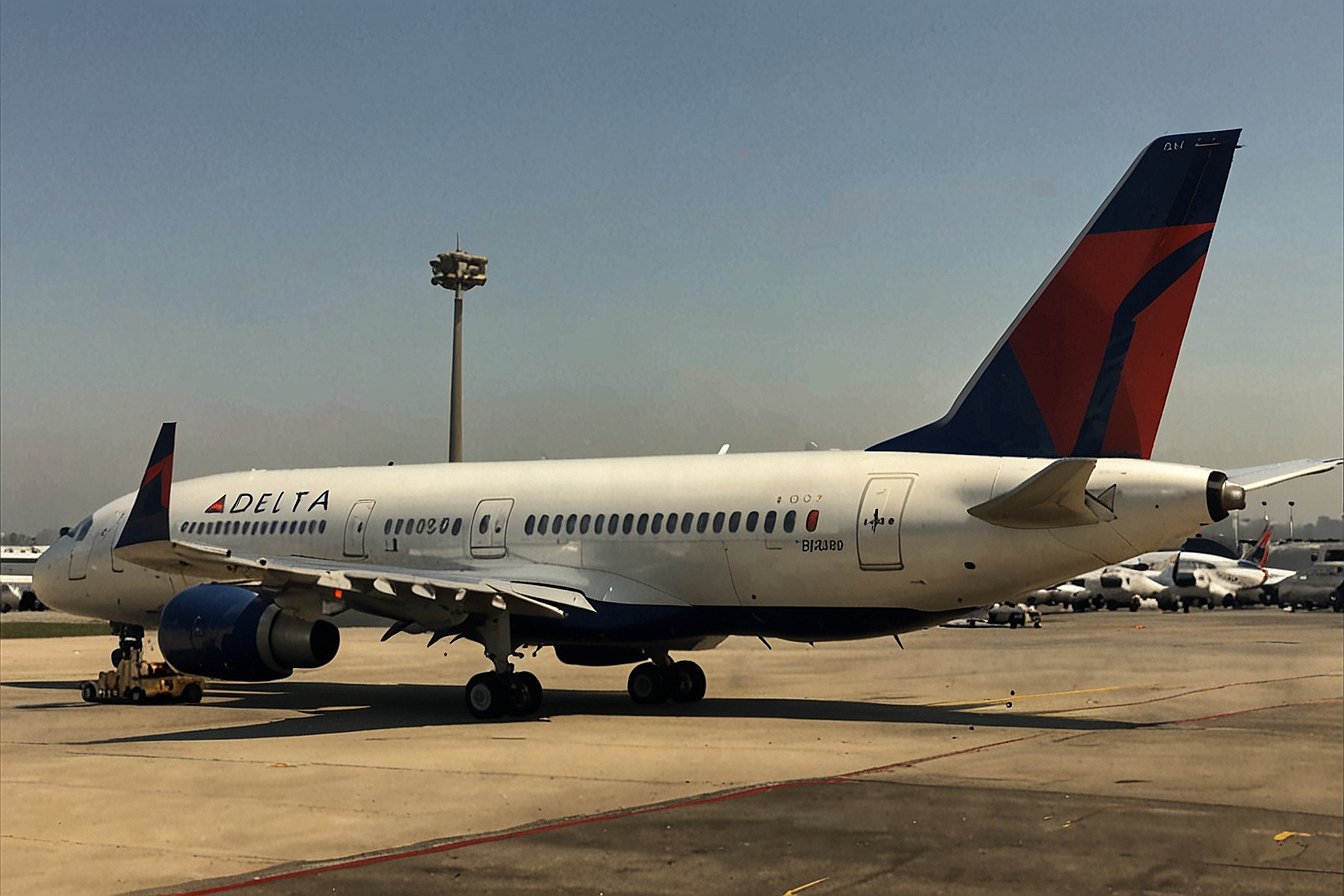
You settle into your seat for what should be a straightforward long-haul trip from Detroit to Tokyo. The engines hum, the seatbelt sign clicks off, and the Pacific stretches out ahead. Then, hours later, the captain’s voice comes over the speakers with that careful, measured tone every frequent flyer knows means something is up. That’s exactly what unfolded on Delta flight DL275 Diverted LAX in late May 2025, and it quickly became one of the most talked-about diversions of the year.
The flight left Detroit Metropolitan Wayne County Airport (DTW) bound for Tokyo Haneda (HND) on an Airbus A350-900, registration N508DN. What started as a routine 13-hour journey turned into a 12-hour-15-minute odyssey that ended safely at Los Angeles International Airport (LAX). No one was hurt, no dramatic emergency landing, just a textbook example of aviation putting safety first. But why exactly did Delta flight DL275 divert LAX, and what does the whole episode tell us about how modern airlines handle the unexpected?
Let’s walk through it step by step, the way I always like to unpack these stories after years of digging into flight data and talking to pilots and safety experts. You might not know this, but diversions like this happen more often than passengers realize. They rarely make headlines unless the plane is big and the route is long. This one did.
The Incident Unfolds: What Triggered the Turnaround
The Airbus A350 is a marvel of engineering, built to cross oceans with impressive efficiency and built-in redundancies. On May 27, 2025, it pushed back from gate A46 at DTW a little behind schedule. The inbound aircraft from Amsterdam had arrived late, so takeoff finally happened at 3:53 p.m. local time. Passengers settled in for the overnight haul across the North Pacific.
Everything felt normal for the first several hours. The plane climbed to its cruising altitude of 38,000 feet. Then, roughly 620 nautical miles southwest of Anchorage, Alaska, while still over the cold, moisture-laden air of the Bering Sea region, the cockpit warning system lit up. One of the two Rolls-Royce Trent XWB engines had flagged an issue with its anti-ice system.
Think of the anti-ice system as the plane’s windshield wipers for the engines, except instead of rubber blades it uses precisely controlled heat to stop ice from forming on the intake lips and probes. At high altitudes in certain weather, moisture can freeze in seconds. If that ice builds up unchecked, it can disrupt airflow, throw off engine performance, or in extreme cases trigger a rollback. Not ideal when you’re hours from the nearest runway over open ocean.
The system didn’t fail completely. It sent a cautionary alert. But for a transpacific flight, “caution” is enough to change the plan. The pilots ran their checklists, talked to Delta’s operations center on the ground, and made the call: divert.
Full Timeline: From Detroit to LAX
Here’s how the hours played out, based on flight tracking data and airline reports:
- 3:53 p.m. EDT, May 27: DL275 departs DTW (delayed departure noted).
- Approximately 9:00–10:00 p.m. EDT: Aircraft reaches cruising altitude over the North Pacific. Normal operations.
- Around 11:00 p.m. EDT (roughly 5–6 hours airborne): Anti-ice system warning triggers while 620 nautical miles southwest of Anchorage. Crew begins evaluation.
- Shortly after warning: Pilots declare the diversion to air traffic control, coordinate with Delta dispatch, and begin the long turn back east.
- Next 5 hours: Plane heads toward the U.S. West Coast at normal cruise speed and altitude. No further issues reported. Flight attendants keep the cabin calm with regular updates.
- 1:08 a.m. PDT, May 28 (some trackers show 1:38 a.m.): Safe landing on Runway 06R at LAX after 12 hours and 15 minutes total airborne time.
Emergency vehicles stood by as a precaution, but none were needed. Passengers deplaned normally, and ground crews immediately began inspecting the aircraft.
Why LAX and Not Somewhere Closer?
You might wonder why the crew didn’t simply turn back to Detroit or divert to Anchorage. That’s a fair question, and the answer comes down to logistics and smart risk management. LAX offered several advantages: full Delta maintenance capabilities for the A350, Rolls-Royce engine specialists on call, long runways that handle heavy, fuel-laden widebodies, and favorable weather conditions at the time. Anchorage, while closer geographically, lacks the same level of immediate heavy-maintenance infrastructure for this particular aircraft type on short notice. Detroit would have meant flying back through potentially similar weather systems without solving the root issue.
In my experience covering these events, pilots always weigh fuel burn, weather, airport capabilities, and passenger comfort when they pick a diversion field. LAX checked every box.
Breaking Down the Engine Anti-Ice System
Most people picture de-icing as something that happens on the ground before takeoff. Up at cruise, it’s a different game entirely. The Trent XWB engines on the A350 use bleed air from the engines themselves, routed through piccolo tubes to heat the leading edges. Sensors monitor everything in real time. A single fault in a valve, sensor, or control unit can trigger the alert without affecting thrust or basic engine operation.
Honestly, this isn’t talked about enough outside aviation circles, but these systems are why we can fly safely through icing conditions that would ground smaller planes. The fact that the crew acted on a warning rather than waiting for an actual problem shows how conservative the industry has become. Some experts disagree and argue modern jets could continue safely with one engine’s system offline, but here’s my take: over the middle of the ocean is no place to test that theory.
Crew Response and How Passengers Experienced It
From everything reported, the flight crew handled the situation with the kind of professionalism that makes you proud to fly Delta. The captain’s announcements were calm and factual. Flight attendants moved through the cabin checking on people, offering reassurance, and keeping the mood light where possible. No panic, no drama, just steady communication.
Passengers later described a mix of surprise and relief once the plane touched down in Los Angeles. Delta quickly arranged hotels, meal vouchers, and rebooking onto later flights to Tokyo. Some travelers even posted videos of the deplaning, joking about the unexpected California layover.
What This Means for Passenger Safety Today
Here’s the bigger picture you should take away. Modern aviation builds in layers of protection, and diversions like DL275 prove the system works. The A350 has multiple independent systems so that one fault doesn’t cascade. Pilots train constantly for these exact scenarios. Airlines maintain real-time communication with aircraft anywhere on the planet. And regulators require carriers to err on the side of caution.
Compare that to the days when planes flew with fewer redundancies and less sophisticated monitoring. We’ve come a long way. Still, incidents like this remind us that safety is never 100 percent automatic. It requires human judgment at the sharp end.
To put the decision in context, here’s a quick comparison of the options the crew faced:
| Option | Pros | Cons | Why It Wasn’t Chosen |
|---|---|---|---|
| Continue to Tokyo | On schedule, minimal disruption | Risk of icing escalation over ocean | Safety priority over schedule |
| Return to Detroit | Familiar airport, shorter flight | Same weather systems, limited repair | Maintenance facilities insufficient |
| Divert to Anchorage | Closest geographically | Smaller runways for heavy A350, less support | LAX offered full engine expertise |
| Divert to LAX | Full maintenance, long runways, weather | Longer flight time | Best overall balance of safety and support |
The table shows why LAX made perfect sense once you look beyond simple distance.
Passenger Rights and What to Expect in a Diversion
If you ever find yourself on a diverted flight, know your rights. Under U.S. Department of Transportation rules, airlines must provide meals, hotels for overnight delays, and rebooking at no extra cost when the diversion is within their control. Delta went further here, offering compensation in many cases. Always check the Delta app or website for your specific options. And remember, these protocols exist precisely because airlines have learned from past events.
FAQ
Why did Delta flight DL275 divert to LAX?
The diversion happened because of a cautionary warning in the engine anti-ice system on one Rolls-Royce Trent XWB engine. Pilots chose not to continue the long overwater leg without full confidence in the system.
Was the plane in immediate danger?
No. The aircraft remained fully controllable and stable throughout. This was a precautionary measure, not a mayday situation.
How long did passengers spend in the air?
Just over 12 hours total, including the five-hour return leg to Los Angeles. That’s actually shorter than the original scheduled flight time to Tokyo.
Did anyone get hurt or was there panic on board?
No injuries occurred, and reports indicate the crew kept everyone calm with clear updates. Social media posts from passengers later showed relief more than fear.
Will Delta face any penalties or investigations?
Routine maintenance inspections followed, and the FAA reviews all diversions as standard procedure. No indication of regulatory trouble; this falls squarely into normal safety operations.
What happens to the aircraft now?
N508DN underwent inspection and repair at LAX. Once cleared, it returned to service. Delta works closely with Rolls-Royce on these matters to prevent recurrence.
Could better technology have prevented this?
Possibly. Some airlines are testing predictive analytics that flag potential issues before takeoff. But even the smartest systems still rely on pilots making the final call in the air.
Is this common for long-haul flights?
Diversions happen a few dozen times a year across major carriers. Most go unreported because they’re handled smoothly. DL275 stood out because of the aircraft size and route length.
Final Thoughts
Looking back, the diversion of Delta flight DL275 to LAX feels less like a dramatic story and more like a quiet win for the entire aviation system. A potential problem surfaced thousands of miles from home, the crew evaluated it calmly, picked the smartest landing spot, and everyone walked away safe. That’s the kind of outcome you want to see every single time.
If you ask me, these events should make you feel more confident about flying, not less. They prove that the people up front and the systems behind them refuse to gamble with your safety. Next time you board a long-haul flight, maybe give the crew an extra nod of appreciation. You never know what quiet decisions they might be making to get you there in one piece.
Have you ever been on a diverted flight? Drop your story in the comments. I’d love to hear how it went for you. Safe travels out there.