 By Gleamze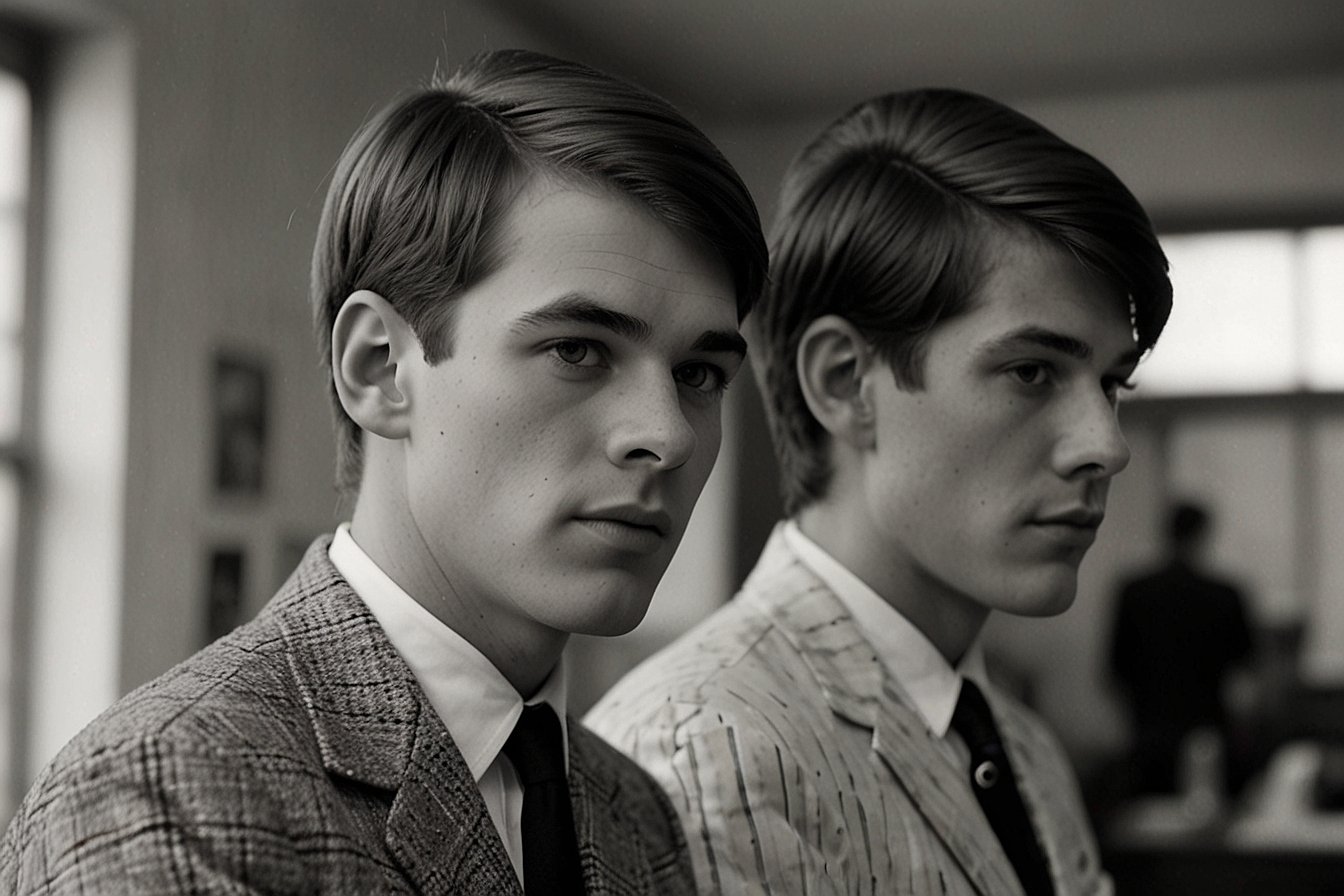
Key points
- Research suggests haircuts 1960s evolved from polished, conservative looks in the early decade to bold, identity-driven styles by the mid-1960s, driven by cultural shifts like the British Invasion and Mod culture.
- It seems likely that men’s sleek pompadour and side parts gave way to the mop-top, while women moved from towering beehive hairstyle and bouffant to Vidal Sassoon’s geometric cuts.
- Evidence leans toward these iconic styles offering practical inspiration today for vintage enthusiasts, stylists, costume designers, and anyone seeking retro aesthetics, with modern adaptations that suit all hair types and require minimal daily effort.
Core Styles Overview Early haircuts 1960s reflected post-war restraint: men favored short, slicked-back crew cut or deep side parts with pomade for that Mad Men polish, while women embraced voluminous updos held by heavy spray. Mid-decade brought revolution through the Beatles’ shaggy mop-top for men and precision bobs for women.
Modern Styling Essentials: Use pomade for men’s volume or texturizing spray for women’s lift; avoid over-teasing to prevent damage. These looks blend seamlessly into today’s wardrobes, whether for a professional setting or creative expression.
Quick Tips for Success Start with a quality trim from a barber familiar with barbershop heritage, then practice at home. Gen Z and Millennials can adapt these for everyday wear by softening edges with matte products.
Imagine flipping through old family photos or binge-watching a period drama and spotting that perfect balance of polish and rebellion in someone’s hair. You want the look, but you worry it will feel like a costume rather than your own style. You are not alone. Many vintage fashion enthusiasts, professional barbers, costume designers, and modern individuals (Gen Z and Millennials alike) crave the effortless cool of haircuts 1960s without the hassle of outdated maintenance.
This guide explores the seismic shifts in grooming during the most transformative decade of the 20th century. From the conservative post-war elegance of early Mad Men sleek styles to the radical Mod culture expressions of the mid-1960s, these haircuts 1960s were more than trends, they were statements of identity, freedom, and cultural change. We blend historical context with actionable styling advice so you can recreate these iconic looks today, whether you are sitting in a traditional barbershop or experimenting at home.
By the end, you will understand the evolution of 1960s barbershop classics for modern hair, popular 1960s short hairstyles for women, and how to style 1960s haircuts for men with confidence. Let’s dive in and discover how these styles can empower your personal aesthetic.
The Early 1960s: Post-War Conservatism and Mad Men Sleek
The decade opened with grooming that echoed the structured 1950s: neat, professional, and understated. Men in offices and on Madison Avenue embodied the Mad Men vibe, while women favored height and volume that projected sophistication. These styles felt safe yet refined, rooted in barbershop heritage where precision and products created lasting hold.
If you are a costume designer recreating 1960 office scenes or a professional barber advising clients on heritage cuts, these early looks provide the foundation.
Men’s Classics: Pompadour, Side Part, and Crew Cut
Men kept things tight and controlled. The pompadour featured longer hair on top sculpted upward and back with oil or petroleum jelly, sides slicked tight, and sometimes creeping sideburns. A classic side part offered a clean businessman look that grew slightly shaggier as the decade progressed, while the crew cut and flat top delivered military-inspired brevity.
Icons like Don Draper (from the series that defined the era) wore a deep side part with volume pushed back, achieved by scissors-only cuts and pomade. Barbers used traditional techniques to taper the neck cleanly. These styles required daily combing but projected authority.
Women’s Towering Styles: Beehive and Bouffant
Women embraced drama with the beehive hairstyle, a cone-shaped updo created by backcombing (teasing) the crown and lacquering with heavy spray like Aqua Net. The bouffant added rounded volume all over, often enhanced with rollers or hairpieces. Stars such as Jackie Kennedy and Brigitte Bardot made these looks glamorous and everyday.
The techniques were straightforward but time-intensive: set hair in large rollers, tease for lift, smooth the outer layer, and spray liberally. These styles lasted days, perfect for busy working women of the time.
The Mid-1960s Shift: British Invasion and Mod Culture
By 1963-1964 everything changed. The British Invasion brought the Beatles and Mod culture to the forefront, challenging old rules. Hair became a symbol of youth, rebellion, and modernity. Salons replaced some barbershops as the go-to for cutting-edge styles.
This era speaks directly to modern individuals seeking classic 1960s mod haircuts. The shift emphasized freedom and individuality.
The Mop-Top Revolution
The mop-top, coined by the Beatles (they called it the “Arthur”), featured shaggy layers covering the ears, a fringe sweeping across the forehead, and natural texture. It started as a bowl cut but grew longer and more tousled. Boys and young men everywhere copied it, marking the first major break from short, slicked styles.
Styling was simple: grow out the sides, comb forward or slightly to the side, and let it fall naturally. No heavy products needed, which made it revolutionary.
Vidal Sassoon’s Geometric Revolution
No one transformed women’s hair more than Vidal Sassoon. In 1963 he introduced the five-point cut, a geometric bob with sharp angles inspired by Bauhaus architecture. It fell naturally into place, required no rollers or nightly setting, and liberated working women. Muses included Mary Quant (who said Sassoon “put the top on” her designs), Nancy Kwan, Grace Coddington, and later Mia Farrow’s pixie.
The technique involved precise scissor work for blunt edges and asymmetry. Women with the Vidal Sassoon look could wash, dry, and go, a huge departure from lacquered updos. This innovation defined Mod culture and influenced short hairstyles for decades.
Late 1960s: Counterculture and Emerging Freedom
Toward the decade’s end, 1960s counterculture loosened everything. Men’s hair grew past the collar, facial hair returned, and women embraced natural textures or longer lengths with minimal styling. The Afro and natural styles gained prominence as statements of pride.
These changes reflected broader social movements and set the stage for 1970s styles. For barbers and stylists today, understanding this progression highlights the evolution of 1960s mens grooming.
How to Style Haircuts 1960s for Men Today
Recreating these looks is easier than you think and works for straight, wavy, or fine hair.
Modern Pompadour or Side Part
- Ask your barber for a scissors cut: shorter sides, longer top.
- Towel-dry, apply matte pomade evenly.
- Blow-dry upward and back while combing for volume.
- Finish with a side part or slight lift at the front.
Mop-Top Update Grow the fringe to brow level, add light layers, and use texturizing spray for movement. Tousle with fingers for that effortless Beatles vibe. Avoid perfect symmetry for authenticity.
Common mistake: using too much shine product. Opt for matte finishes to keep it contemporary.
Popular 1960s Short Hairstyles for Women: Recreate the Mod Look
Women’s styles offer versatility for short to medium hair.
Beehive Hairstyle (Modern Cheat Version)
- Blow-dry with a round brush for base volume.
- Tease the crown lightly or use a hair donut for lift.
- Gather into a high ponytail, twist and pin, leaving face-framing pieces loose.
- Set with a strong-hold spray.
Vidal Sassoon Geometric Bob Visit a stylist for precise, blunt ends and angles. At home, blow-dry straight or add soft waves with a curling iron. It falls naturally, making it ideal for busy lifestyles.
Pixie or Five-Point Cut: Keep trims every 4-6 weeks. Style with fingers and light pomade for texture. Twiggy’s version still feels fresh.
These popular 1960s short hairstyles for women suit fine or thick hair and require far less maintenance than original versions.
Barbershop Heritage Meets Modern Grooming
Traditional barbershops preserved side parts and crew cuts throughout the decade, using hot towels and straight razors for clean lines. Today’s stylists blend this heritage with Mod culture elements for clients seeking 1960s barbershop classics for modern hair.
Pro tip: communicate reference photos clearly. Ask for taper vs. fade to match the era.
| Decade Phase | Men’s Key Styles | Women’s Key Styles | Key Influence | Modern Adaptation Tip |
|---|---|---|---|---|
| Early 1960s | Pompadour, side part, crew cut | Beehive hairstyle, bouffant | Post-war polish, Mad Men | Use matte pomade; minimal teasing |
| Mid-1960s | Mop-top | Vidal Sassoon geometric bob, five-point cut | British Invasion, Mod culture | Texturizing spray for movement; precision trim |
| Late 1960s | Longer shag, natural | Longer natural or pixie | Counterculture | Finger-style for texture; less product |
This table highlights the progression and gives quick references for stylists or DIY enthusiasts.
Common Mistakes and Pro Tips for Authentic Results
Avoid over-spraying (it damages hair) or copying styles without considering face shape. For example, the mop-top suits oval faces best, while the geometric bob flatters heart shapes.
Invest in quality tools: boar bristle brush, good pomade, and texturizing spray. Experiment on weekends so the look feels natural by Monday. Costume designers: layer in accessories like headbands for extra period accuracy.
These haircuts 1960s continue to inspire because they celebrate individuality. Whether you lean beatnik cool or full Mod revolution, the techniques translate beautifully to 2026 wardrobes.
Conclusion
The haircuts 1960s journey from Mad Men’s sleek conservatism to vibrant Mod culture freedom shows how hair can express cultural moments. You now have the history, the icons, and the step-by-step tools to bring these looks to life.
You may also like: Prom Hair Trends 2026: Updos, Braids, Accessories