
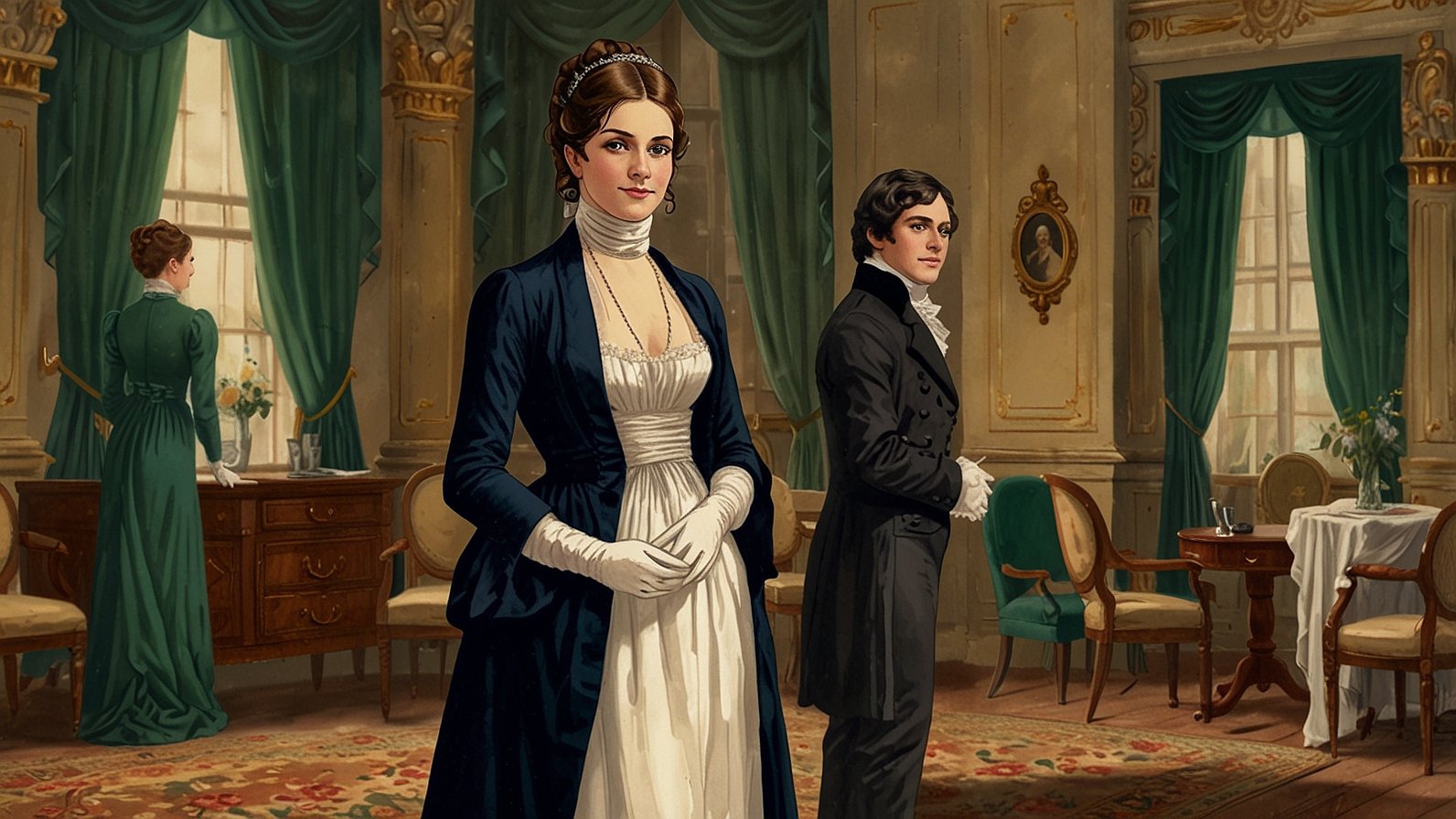
Have you ever watched Bridgerton or read Pride and Prejudice and found yourself captivated by the graceful, high-waisted gowns and impeccably tailored coats? You’re not alone. The romance of the Regency period fashion is powerfully alluring, but the reality of what people wore, from the drape of a muslin gown to the cut of a tailcoat, is a fascinating story of social change, neoclassical ideals, and meticulous tailoring. This article will move beyond the silver-screen sheen to explore the authentic clothing of 1811-1820, providing you with a comprehensive guide to the styles, their meanings, and how they were lived in. Whether you’re a historical costumer, a devoted Janeite, or simply a history buff, prepare to see the era in a whole new light.
The Neoclassical Revolution: From Georgian Opulence to Regency Simplicity
To understand Regency style, you must first appreciate the dramatic shift it represented. The late 18th century was dominated by the Rococo: wide pannier skirts, heavy brocades, towering wigs, and a profusion of ornamentation for both sexes. The French Revolution and the rise of democratic ideals changed everything. Fashion looked back to the democracies of ancient Greece and Rome, embracing the Neoclassical style.
This meant clothing began to mimic the draped forms of classical statues. Silhouettes became columnar, fabrics lightened, and ornamentation was pared back to elegant simplicity. It was a sartorial declaration of a new, “natural” order. This revolution in dress coincided with the official British Regency (1811-1820), when the future George IV ruled in place of his ill father, but the style period broadly encompasses 1795-1820.
The Regency Woman: Grace, Layers, and the Infamous Muslin
A woman’s wardrobe was a complex system of layers, each with social and practical purpose. The iconic look was defined by the Empire waist, a bodice seam sitting just below the bust, from which the skirt fell straight down. This created a long, graceful line that was the absolute opposite of the cinched waists that came before and after.
The Foundation: Chemise, Stays, and Petticoats
Contrary to popular belief, the look wasn’t achieved by just slipping on a dress. The foundation was essential:
- Chemise: A simple, knee-length linen shift worn against the skin.
- Stays (Corset): Regency stays were radically different from Victorian ones. They were designed to lift and separate the bust into a high, rounded shape favored by the era, while narrowing the back. They were not primarily for waist reduction.
- Petticoats: Often just one, sometimes quilted for winter, to add a little warmth and protect the outer gown.
The Gowns: From Morning Dress to Evening Elegance
A woman changed her dress multiple times a day to suit her activities.
- The Morning Dress: A simple, high-necked gown worn at home for family breakfasts or informal visits. It was often made of sturdier cotton like cambric.
- The Walking Dress or Promenade Gown: Worn for going out in public. This is where the pelisse (a coat-like garment that closely followed the gown’s silhouette, often lined and trimmed) or the Spencer jacket (a short, waist-length jacket, often military-inspired) were essential for warmth and modesty.
- The Evening Gown: The most iconic and daring. Made of sheer fabrics like muslin, silk, or gauze, these gowns featured lower necklines (often off-the-shoulder), short sleeves, and minimal decoration. The sheer muslin could be shockingly revealing, leading to complaints about “toilette of the nymphs” and satirical cartoons. For a deeper look at this iconic garment, explore the history of the empire waist dress.
The Regency Fashion Timeline: 1811-1820
The era wasn’t static. Silhouettes evolved subtly:
- Early Regency (c. 1811-1815): Gowns are at their most classically columnar, with emphasis on vertical decoration. Trains were common for evening.
- Mid to Late Regency (c. 1815-1820): Skirts begin to widen slightly at the hem, often with decorative trimming (flounces, ruffles, tucks). Sleeves start to develop a small puff at the top. The seed of the upcoming Romantic era’s extravagance is sown.
The Regency Man: The Birth of the Modern Suit and the Cult of the Dandy
Men’s fashion underwent an even more profound and lasting change. The ornate, colorful silks and velvets of the 18th-century “macaroni” gave way to a sober, tailored uniformity that is the direct ancestor of the modern business suit. This revolution is personified by Beau Brummell, the arbiter of Regency taste. He championed immaculate cleanliness, perfect fit, and understated elegance over flamboyant display—a philosophy known as dandyism.
The Core Components of a Gentleman’s Wardrobe
- The Shirt: White linen, with a high collar that could reach the cheeks. It was the only truly white garment, emphasizing cleanliness.
- The Cravat: The centerpiece of male elegance. A large square of linen or muslin intricately wrapped and tied around the neck. Brummell was said to spend hours achieving the perfect fold.
- The Tailcoat: The quintessential day coat. Made of dark wool (blue, brown, bottle-green, black), it was cut to fit snugly across the chest and shoulders, with long tails in the back. It did not button across the front.
- The Waistcoat (Vest): A key spot for a dash of color or pattern, often in silk or embroidered fabric. It was always worn under the tailcoat.
- Breeches & Pantaloons: Breeches (ending at the knee) were still worn for formal evening wear. For day, pantaloons—tight, ankle-length trousers often made of stretchy jersey or knitted fabric—became standard. They were strapped under the foot to maintain a taut line.
- Footwear: Top boots were common for riding and daywear. For formal occasions, Hessian boots (with a heart-shaped top and tassel) or simple black pumps were worn. Discover more about Regency era shoes and accessories to complete the look.
Accessories & Adornments: The Devil in the Details
No outfit was complete without its finishing touches, which spoke volumes about the wearer’s status and taste.
- Women: Reticules (small drawstring bags, as pockets vanished with the slim silhouette), gloves for every occasion, turbans or feather-adorned caps, paisley shawls imported from India, and simple jewelry like cameos, pearls, and coral.
- Men: A walking stick, a pocket watch with a fob, gloves, a beaver-felt top hat, and a signet ring. Simplicity was the rule, but quality was paramount.
Dressing for Daily Life: From the Ballroom to the Countryside
Understanding daily life clothing in the Regency era requires context. The sheer muslin gowns of the evening would be impractical for a brisk walk. A lady’s pelisse was essential outerwear. In the country, practicality ruled: sturdier fabrics, longer sleeves, and thicker petticoats were worn. Men swapped their tight pantaloons for more practical trousers for riding or hunting. The glamour of the ballroom was just one, highly ritualized, facet of Regency dress.
Regency vs. Georgian Fashion: What’s the Difference?
This is a common point of confusion. Georgian fashion (1714-1830) is an umbrella term encompassing several style periods, including the late Rococo. Regency fashion is a specific subset within that, defined by its Neoclassical influence. The simplest way to spot the difference is in the silhouette: Georgian (mid-18th century) is wide at the hips with a low, pointed waist. Regency is columnar with a high Empire waist. For a visual guide to this evolution, our article on the difference between Regency and Georgian fashion provides a clear comparison.
How to Recreate the Regency Look: Key Takeaways for Enthusiasts
Whether you’re sewing a costume for a ball or crafting a cosplay, focus on these pillars:
- Silhouette is King (and Queen): For women, achieve the high Empire waist and columnar skirt. For men, seek a superbly fitted coat and a taut trouser line.
- Fabric Matters: Opt for lightweight, draping fabrics like cotton voile, lawn, or lightweight wool. Avoid heavy brocades or satins.
- Mind the Layers: The authentic look is built from the skin out—shifts, stays, and petticoats create the correct shape.
- Embrace Elegant Simplicity: Ornamentation should be subtle—a bit of piping, a small ruff, an embroidered border. Let the beautiful lines of the garment speak first.
The world of Regency period fashion is a captivating blend of art, politics, and social theater. It was an era that traded the heavy ornament of the past for a vision of classical purity, laying the groundwork for modern menswear and leaving us with an enduring image of romantic elegance. By understanding the layers, the logic, and the lifestyle behind the clothes, we gain a richer appreciation for the people who wore them.
You May Also Like: Fashion White 2125: Wear the Future Now