
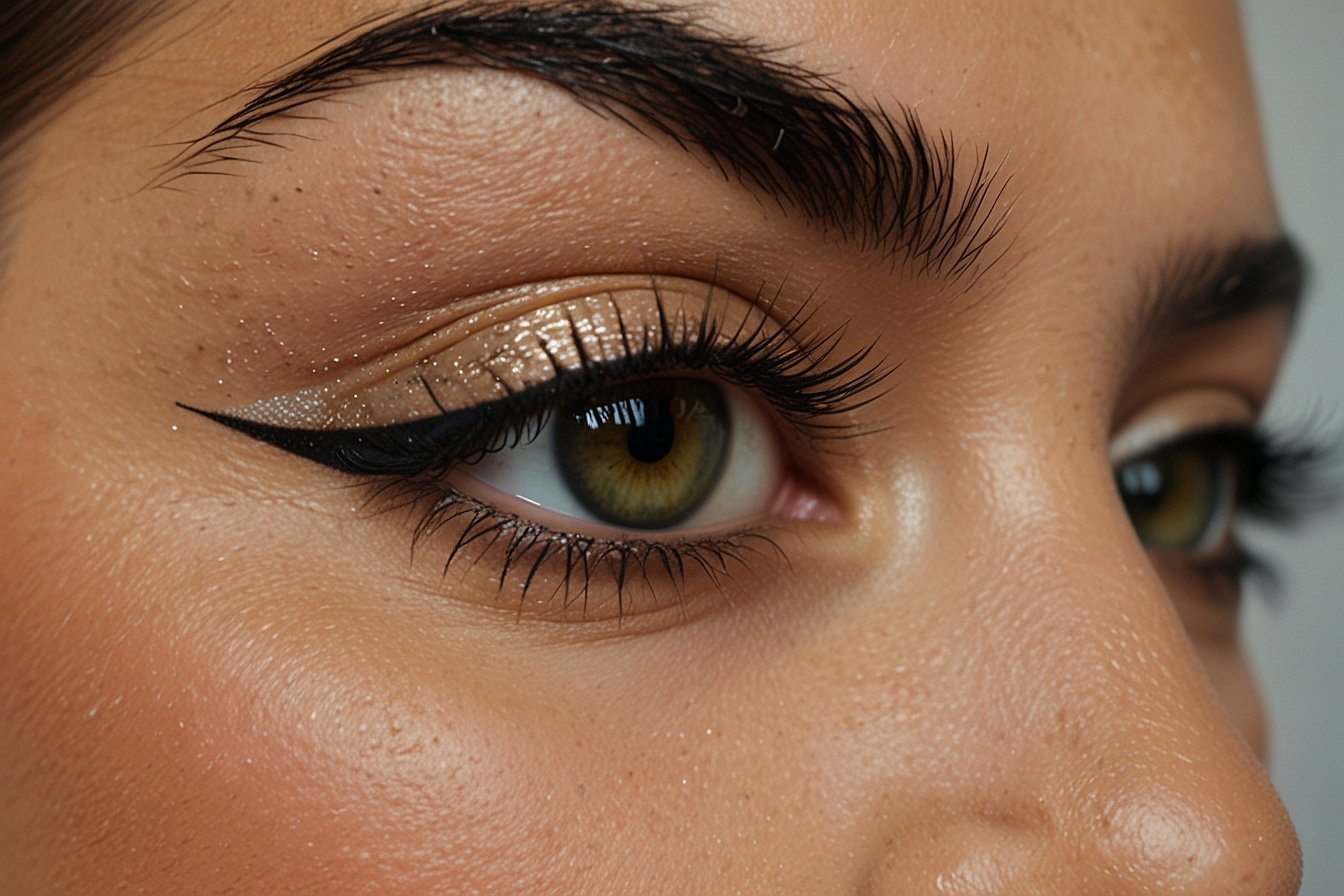
Does your perfectly blended eyeshadow vanish the moment you open your eyes? Do you struggle with eyeliner that transfers or looks smudged no matter what you try? If so, you might have hooded eyes. This common eye shape, where a fold of skin droops down from the brow bone to cover the mobile eyelid, is a beautiful genetic trait for many and a natural part of aging for others. But it can make traditional makeup tutorials feel frustrating and irrelevant. This guide is here to change that. We will explore the anatomy behind hooded eyes, provide a step-by-step makeup guide tailored to your unique features, and discuss the full spectrum of options, from expert beauty techniques to clinical treatments.
What Are Hooded Eyes? Understanding Your Unique Anatomy
Simply put, hooded eyes have a prominent brow bone and a fold of skin that partially or fully covers the eyelid crease and the movable part of the lid when your eyes are open. It is like having a built in awning. This anatomical feature is often genetic and can be related to your orbital bone structure or the presence of an epicanthal fold. It is important to know that having hooded eyes is completely normal and is not a flaw.
However, as we age, everyone experiences a loss of skin elasticity and collagen loss. This can lead to a condition called dermatochalasis, where excess skin on the upper eyelid begins to droop, creating or exacerbating a hooded appearance. This is a natural part of the skin’s aging process.
Genetic Hooded Eyes vs. Aging: Knowing the Difference
It is helpful to understand the root cause of your eye shape, as it can guide your approach. Genetic hooded eyes are present from a young age and are a stable feature of your facial structure. The hood is typically caused by the placement of the orbital bone and the amount of skin on the lid.
Age-related hooding, or dermatochalasis, develops over time. You might notice the skin feeling thinner, looser, and more crepe-like. The droop may gradually increase, sometimes even affecting your peripheral vision. A sudden onset of a drooping eyelid, especially if it is only on one side, could indicate a medical condition called ptosis, which involves the muscle that lifts the eyelid. If you experience sudden changes, it is important to consult a doctor.
The Masterclass: Makeup Techniques for Hooded Eyes
The golden rule for hooded eyes makeup: we must create the illusion of space and dimension on a canvas that likes to hide our work. The goal is to “lift” the eye visually. Let us break it down step by step.
Step 1: Prime and Set Your Canvas
Always start with an eyeshadow primer. This creates a smooth, even base and, most crucially, prevents makeup from transferring onto the hooded skin above your crease. After priming, lightly set the lid with a translucent powder or a skin tone eyeshadow to ensure easy blending.
Step 2: Eyeshadow Placement is Everything
Forget the standard “apply to the crease” advice. Your visible crease is not your actual crease.
- Look Straight Ahead into a mirror. Identify where you want your new, higher crease to be. This is typically just above the natural fold of your hood.
- Apply a Transition Shade using a fluffy brush in this new, higher crease area. Use a matte, medium-toned color (like a soft brown or taupe) and blend it back and forth in windshield wiper motions. This color should be visible when your eyes are open.
- Deepen the Outer V to add depth. Apply a darker shade to the outer corner of your eye, extending it slightly upward and outward toward the tail of your brow. This creates a lifted, cat eye effect.
- Use Shimmer Strategically. Apply a lighter, shimmery shade only to the very center of your mobile lid (the part that is visible when your eyes are open). Avoid putting shimmer on the inner corner if your hood comes down low there, as it can emphasize the fold.
Step 3: The Eyeliner Game Changer
A traditional thick liner will swallow your lid. The key is thin, precise lines and clever placement.
- Tightlining is your best friend. Gently line your upper waterline with a waterproof pencil. This adds definition without taking up lid space.
- Keep the Line Thin. When drawing a line on your lash line, keep it as thin as possible, thickening it only at the very outer corner.
- Try the “Puppy Liner” or “Bat Wing”. Instead of a sharp winged liner that can get cut off by the hood, try a softer, slightly downturned line at the outer corner. Alternatively, the “bat wing” technique involves drawing your wing with your eye open, following the shape of your hood, then filling it in to create a seamless wing when your eyes are open. (Internal link: Consider a future detailed post on “Bat Wing Eyeliner for Hooded Eyes”).
Step 4: Curl Lashes and Apply Mascara
A strong lash curl is non-negotiable. It helps lift the lashes up and away from the hood, making your eyes appear more open. Use a waterproof curling mascara, focusing on the roots and wiggling the wand upward. Concentrate volume on the outer lashes for an extra lift.
Step 5: Frame with Brows
Well-groomed, structured brows provide a fantastic visual lift. A slightly higher, defined arch can help draw the eye upward and balance the hooded lid. Use a brow pencil or powder to fill in any sparse areas and set them in place.
Beyond Makeup: Treatment Options for Hooded Eyes
While makeup is a powerful tool, some may seek more lasting solutions, especially for age-related hooding.
Non-Surgical Lifts and Topical Treatments
The market offers options that provide subtle, temporary improvements. Look for firming eye serums with peptides and retinoids that can mildly improve skin elasticity. At home, microcurrent devices may also offer a slight temporary lift by stimulating facial muscles. While results are modest, they can be a good first step. (External link: The American Academy of Dermatology on skin aging).
The Surgical Solution: Blepharoplasty
For significant hooding or excess skin that affects vision, blepharoplasty is the definitive treatment. This is a surgical procedure where a plastic surgeon removes excess skin, muscle, and sometimes fat from the upper eyelid. It creates a more defined eyelid crease and can dramatically rejuvenate the eye area. It is a personal decision that should be made after a thorough consultation with a board-certified surgeon.
Conclusion: Embrace and Enhance Your Beautiful Eyes
Mastering makeup for hooded eyes is about working with your anatomy, not against it. By understanding the structure of your brow bone and eyelid crease, you can use strategic shadow placement and liner techniques to create stunning, lifted looks. Remember, whether your hooded eyes are a lifelong trait or a newer development from collagen loss, they are a part of what makes your face unique. Start with the primer, practice the new crease placement, and do not be afraid to experiment. Your perfect, eye-opening look is waiting to be discovered.
You May Also Like: Ultimate Sleeping Beauty Dress Guide